

It's one of the first big decisions you'll make about your wedding reception: DJ or live band? The answer shapes your budget, your venue logistics, your music selection, and the overall vibe of your night.
There's no universally "better" choice. At Stag Entertainment, we've worked alongside excellent live bands and we've seen both options succeed and fail. The right answer depends on your priorities, your venue, your guest list, and your budget. Here's an honest, side-by-side breakdown to help you decide.
The Quick Verdict
- Choose a DJ if: You want maximum song variety, smooth transitions, lower cost, and flexibility across genres.
- Choose a live band if: You want the atmosphere of live performance, you have a strong genre preference, and you have the budget and venue space to support it.
- Choose a hybrid if: You want both — and you have the budget for it. (More on this option below.)
Now let's get into the details.
Cost Comparison
This is usually where the conversation starts, because the gap is significant.
Wedding DJ Cost
A professional wedding DJ typically runs $1,500–$4,000 for a full reception, with most couples spending $2,000–$2,800 in major U.S. markets. This usually includes:
- 5–6 hours of reception coverage
- Ceremony sound (sometimes extra)
- Basic dance floor lighting
- MC and announcement services
- A professional sound system
For market-specific breakdowns, see our guides to Denver DJ pricing and Phoenix DJ pricing.
Wedding Band Cost
A professional wedding band runs $4,000–$15,000+ depending on size and reputation, with most couples spending $6,000–$10,000. This typically includes:
- 3–4 hours of live performance (usually in 45-minute sets)
- DJ or recorded music between sets and during breaks
- Sound system designed for live instruments
- Often a separate sound engineer
Bottom line on cost: A live band typically costs 3–5x more than a DJ for comparable quality. For some couples, that gap is meaningful. For others, it's the right investment.

Music Selection and Variety
DJ Advantage: Range
A DJ can play literally any song ever recorded. Across one reception, a skilled DJ might play Frank Sinatra during dinner, Latin music during cocktail hour, top 40 hits at peak dance time, classic rock for the older crowd, and hip-hop for the younger crowd — all seamlessly. If your guest list spans generations and tastes (and most do), this matters enormously.
Band Advantage: Authenticity
A live band brings something a DJ simply cannot: the energy of musicians actually performing. Live drums hit differently. A great vocalist can bring a room to its feet. The chemistry between musicians creates moments that a recording — no matter how good the sound system — doesn't replicate.
The trade-off: most bands have a defined repertoire, often 50–150 songs. They generally play what they know well, with limited ability to take requests outside their core set. Some bands are versatile across genres; many have a clear lane (classic rock, jazz standards, modern top 40).
Energy and Atmosphere
DJ Advantage: Consistency
A DJ keeps the energy flowing. There are no breaks. Transitions between songs are seamless. The dance floor stays full because the music never stops, and the DJ reads the crowd in real time, adjusting song choices based on who's dancing.
Band Advantage: Visual Spectacle
There's no replacement for the visual experience of a live band. The performers, the instruments, the staging — it's a show in itself. Your guests aren't just hearing music, they're watching musicians work. For weddings where atmosphere is the priority, this is hard to beat.
The trade-off: bands take breaks every 45–60 minutes. Even with recorded music filling the gaps, the energy shifts. Skilled bands and DJs minimize this, but it's a real factor.
Space and Logistics
DJ Advantage: Flexibility
A DJ setup typically requires:
- A 6x8 foot table area
- Two or four speakers on stands
- Access to power outlets
- Roughly 30–60 minutes of setup time
This works in nearly any venue — backyards, mountaintops, intimate restaurants, hotel ballrooms.
Band Logistics
A wedding band typically requires:
- A 12x16 foot stage minimum (often larger for big bands)
- Significant power capacity
- Sound check time (often 60–90 minutes)
- Loading dock or accessible vehicle access
- Often a green room or break area
- More expensive insurance and venue coordination
Some venues simply don't accommodate live bands well. Mountain venues, intimate restaurants, and some historic properties have power, space, or noise restrictions that effectively rule out a band. Always confirm with your venue before booking either option. See our guide to the best wedding venues in Denver for venue-specific notes.
Reception Timing and Flow
DJ Advantage: Seamless Timeline
DJs are excellent at managing wedding reception timing. They handle:
- Smooth transitions between dinner, toasts, dances, and cake cutting
- Continuous background music with no breaks
- Rapid pivots if the timeline shifts (which it always does)
- MC duties without missing a musical beat
For a deeper breakdown, our complete wedding reception timeline guide shows how DJs drive the flow.
Band Considerations
With a band, your timeline must accommodate set breaks. Most band-led receptions look something like:
- 7:00–7:45: Set 1 (post-dinner, opening dance set)
- 7:45–8:00: Break with DJ/recorded music (often during cake cutting)
- 8:00–8:45: Set 2 (peak dance set)
- 8:45–9:00: Break
- 9:00–9:45: Set 3 (closing set)
This isn't bad — it's just different. Many couples actually appreciate the natural pacing it creates.
Customization and Personalization
DJ Advantage: Your Exact Songs
Want your specific first dance song, even if it's an obscure indie track? A DJ plays the recording. Want the original studio version of "At Last"? A DJ has it. Your special songs sound exactly like the recording you fell in love with.
Band Considerations
Bands can learn custom songs, but it usually comes at additional cost ($100–$300 per song) and requires booking far enough in advance. The performance will be the band's interpretation, not the original recording. For some couples, this is a feature — a unique cover that becomes your wedding's signature moment. For others, it's a bug.
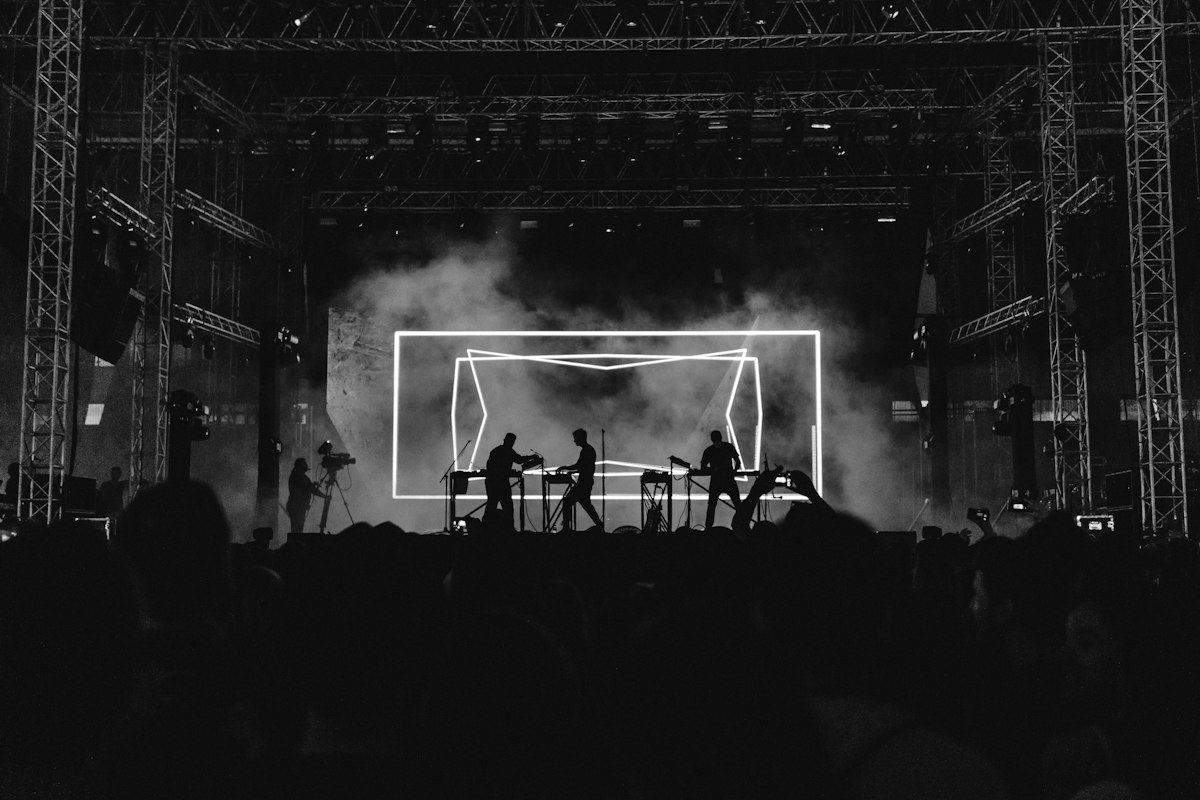
The Hybrid Option: Best of Both Worlds
A growing number of couples are choosing a hybrid approach — a DJ as the primary entertainment with a single live musician (saxophonist, percussionist, vocalist, violinist) joining for select moments.
This works particularly well for:
- Cocktail hour with a live saxophonist over the DJ's track
- Ceremony with a live string player and DJ-managed sound
- Peak dance set with a percussionist adding live energy to DJ tracks
The hybrid approach typically adds $500–$1,500 to a DJ-led wedding — significantly less than a full band — while delivering many of the live music benefits. Stag Entertainment offers hybrid packages with vetted local musicians; contact us to discuss options.
Common Misconceptions
"DJs are cheaper because they're lower quality." False. A top-tier wedding DJ is a highly skilled professional. The cost difference reflects logistics (one person vs. eight musicians), not skill.
"A band makes a wedding feel more elegant." Not necessarily. The right DJ at an elegant wedding feels seamless and sophisticated. The wrong band at any wedding feels like a bar gig.
"DJs just press play." Watching a great wedding DJ work is watching real-time crowd reading, beat-matching, set construction, and live MC work. It's a craft.
"Bands kill the dance floor with breaks." Only if the breaks are handled poorly. Skilled bands transition into recorded music seamlessly.
The Decision Framework
Ask yourselves:
- What's our music DNA? If you have a specific genre obsession (jazz, soul, country), a band specializing in that genre is unbeatable. If your tastes are eclectic, a DJ wins.
- What's our budget priority? If entertainment is in your top three line items, a band is viable. If it's a top-six priority, a DJ delivers more value.
- What does our venue allow? Some venues are simply better for one or the other.
- What's our guest list age range? Wider age ranges generally favor DJs.
- What energy do we want? "Show" energy → band. "Party" energy → DJ. "Both" → hybrid.
The Bottom Line
For most couples, a professional DJ is the right choice. They deliver more music variety, more flexibility, better timeline management, and significantly more value per dollar. The dance floor — the actual measure of reception success — is statistically more likely to stay packed with a great DJ.
A live band is the right choice when atmosphere and live performance are core to your vision, your budget supports it without compromising other priorities, and your venue accommodates it logistically.
The wrong choice? Either option from someone who doesn't take the craft seriously. A bad band is worse than a good DJ. A bad DJ is worse than a good iPod playlist. Vet your entertainment carefully — it matters more than almost anything else on your wedding day.